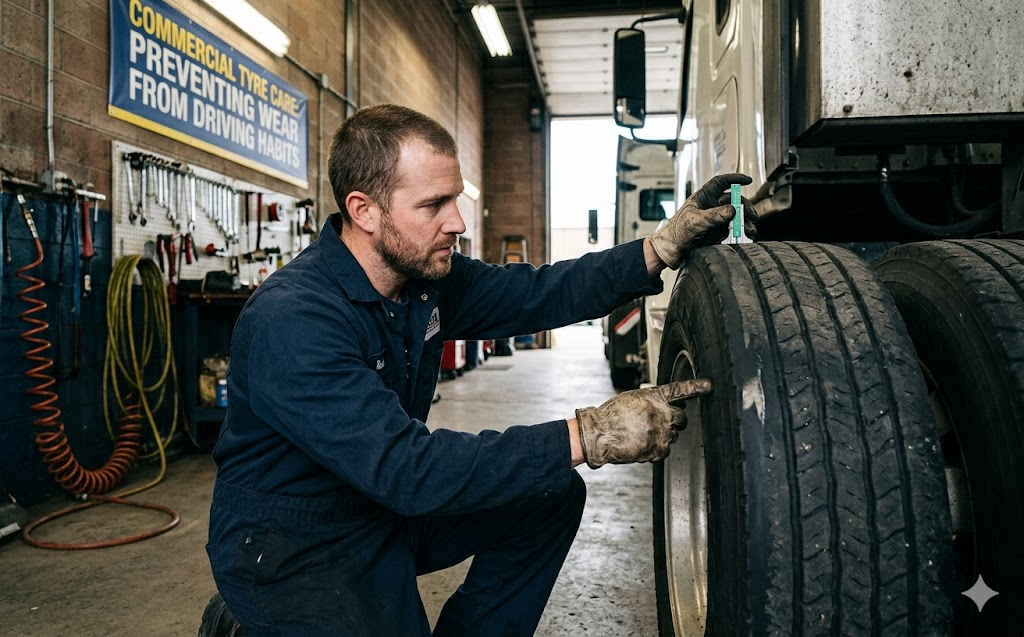
Commercial Tyre Care: Preventing Wear from Driving Habits
Here’s something most fleet managers don’t think about until it’s too late: aggressive driving habits can cut commercial tyre life significantly. That’s not a minor inconvenience. It’s real money bleeding out through unnecessary replacements, unplanned downtime, and avoidable breakdowns on highways and job sites.
We at Birla Tyres engineer bias and radial tyres built specifically for Indian road conditions, from scorching highways to rough mining terrain. But here’s the honest truth: even the toughest bus and truck tyres won’t last if the driver behind the wheel isn’t treating them right.
This guide walks you through seven key driving habits that cause uneven wear, blowouts, and fuel waste, and how to fix them before they cost you.
7 Key Driving Habits for Preventing Tyre Wear
From checking a tyre tread depth and load index to mastering smooth acceleration and braking, there’s a lot about tyre wear left to the driver’s steering wheel. Here are seven key habits that prevent uneven tyre wear:
Habit #1: Master Smooth Acceleration and Braking
Hard acceleration spins tyres unnecessarily, wearing down the centre tread. Hard braking does the same, and worse, it quickly heats up the sidewalls, raising the risk of ply separation on long hauls.
That’s why drivers need to learn crucial braking and driving techniques like anticipating stops, reading the road ahead, and braking progressively. It sounds basic, but most tyre wear issues we see at Birla trace back to this one thing.
Habit #2: Avoid Overloading and Uneven Loads
Every Birla tyre has a Load Index, and that number isn’t only a suggestion. Overloading bulges sidewalls and causes the kind of internal stress that doesn’t show on the surface until a tyre fails at highway speed.
Uneven cargo distribution is just as dangerous. When one side of the axle carries more weight, you get shoulder feathering on the overloaded side and premature wear patterns that rotate through the fleet. Therefore, avoid overloading your vehicle.
Habit #3: Gentle Cornering and Speed Control
Sharp turns at speed are probably the most underestimated cause of sidewall damage. The rubber flexes hard, micro-cracks form, and over months, those become visible cracks, or worse, a blowout mid-corner.
Slowing in corners is the best way to achieve speed control. Our bias ply construction resists flex well, but it’s not a substitute for driving sense. When loaded, slow into corners, under 40 km/h is a good rule of thumb. For OTR and mining operations, cooldown idle periods after heavy work help prevent thermal damage from building up.
Habit #4: Proper Inflation and Alignment Checks
This one’s more of a routine than a driving habit, but it belongs here because drivers are the first line of defence. Under-inflation causes centre wear and excess heat. Over-inflation reduces the contact patch and makes tyres more vulnerable to impact damage on rough roads.
Misalignment pulls the tyre sideways against the road with every kilometre. This means that you’re essentially scrubbing rubber off in a direction it was never designed to move.
Therefore, a proper tyre inflation is the answer to this problem. On a large fleet, that’s significant savings every month.
Habit #5: Road and Weather Awareness
Rain changes everything. Wet roads erode tyre edges faster, and the compounds soften in sustained heat. Both speed up wear in ways that aren’t obvious until you pull the tyres off for inspection.
That’s where simple adjustments go a long way. Reduce speed in the rain. Take 20 km/h as a rule of thumb. Park vehicles in the shade when possible during peak summer. Our R&D team recommends monthly checks for dry rot, especially on vehicles that sit idle during the monsoon season.
Bonus Habits: Rotation, Cleaning, and Pro Inspections
A few more things that make a real difference:
- Rotate tyres every 5000–8000 km: this alone helps even out wear patterns across a set.
- Clean tyres weekly: it’s the easiest way to spot hidden cuts or embedded debris, increase tyre safety, and improve ROI.
- Get professional inspections every quarter: Birla Tyres can often be retreaded for up to twice the original life, but only if they’re caught before damage goes too deep.
Drive Smart, Roll Longer with Birla
None of these habits is complicated. They don’t require expensive equipment or major process overhauls. What they need is consistency and a fleet culture that treats tyre care as part of the job, not an afterthought.
We build our commercial tyres to go the distance on Indian roads. But the difference between 80,000 km and 1 lakh+ km on a single set often comes down to how the driver treats them every day.
About the Author