SEO Professionals
Search Engine Optimization (SEO) feels like driving in the dark until you have the right dashboard. You already know that capturing top spots on Google directly boosts your bottom line, but getting there often seems like a guessing game. Today, we are turning on the headlights to illuminate the most powerful diagnostic tool in search marketing.
Watching a competitor jump ahead of you on page one without knowing why is incredibly frustrating. Industry data reveals that this lack of competitor visibility remains a massive hurdle for growing businesses. Enter Group buy ahrefs platform that acts as an X-ray view into their exact playbook. It is not just for techies; it reveals exactly how rivals win customers.
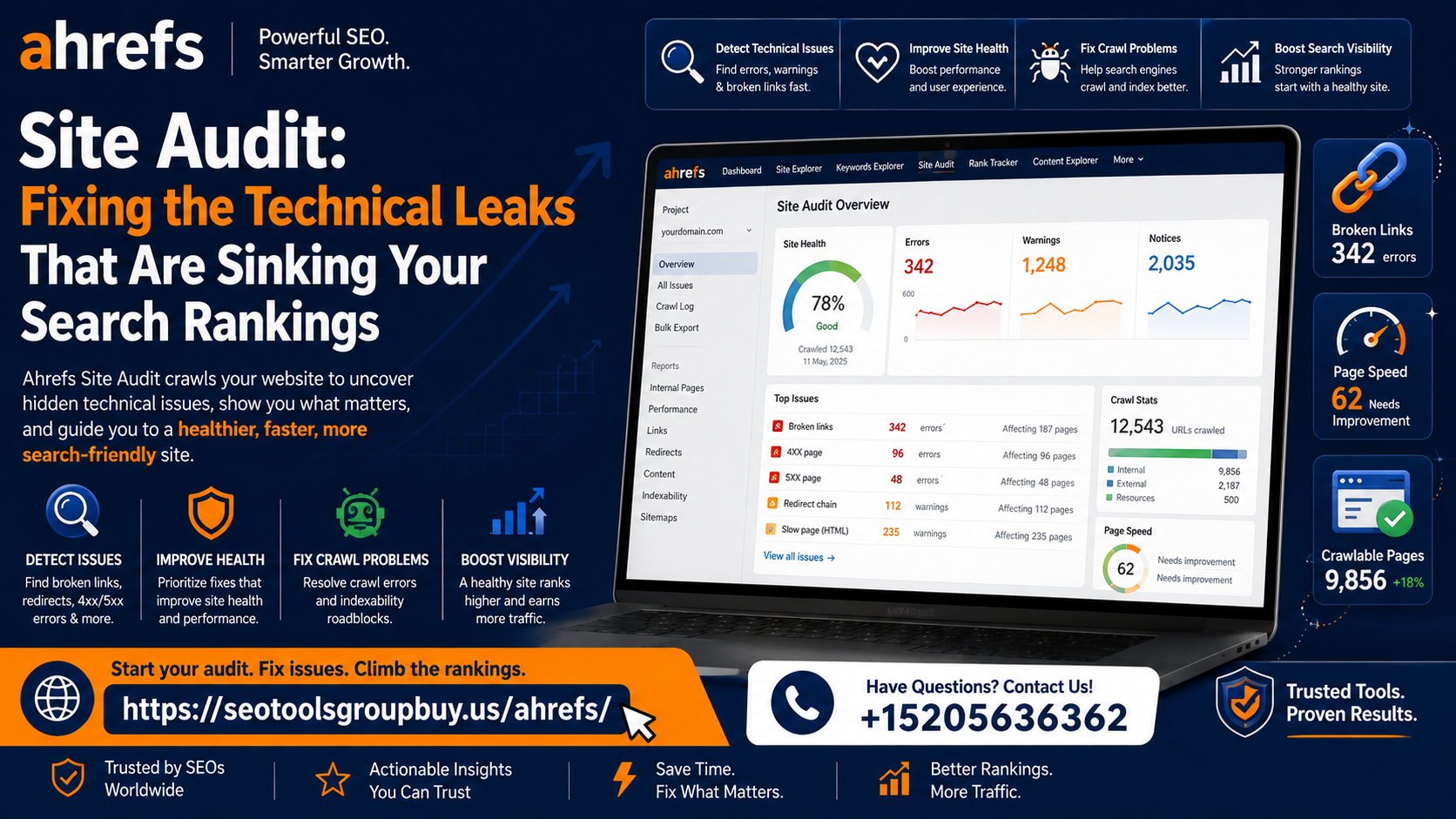
Transforming overwhelming numbers into clear SEO intelligence begins with the dashboard concept. Think of this screen as the digital command center for your physical storefront, showing exactly how many people walk past your signs. Rather than drowning in a complicated seo toolkit, you will quickly master the ahrefs features that truly measure your website’s overall health.
Mastering this toolkit does not require a computer science degree. Soon, you will easily translate those colorful charts into a simple ‘Tuesday Morning To-Do List.’ Transforming search data from technical overwhelm into a clear, actionable growth strategy starts here.
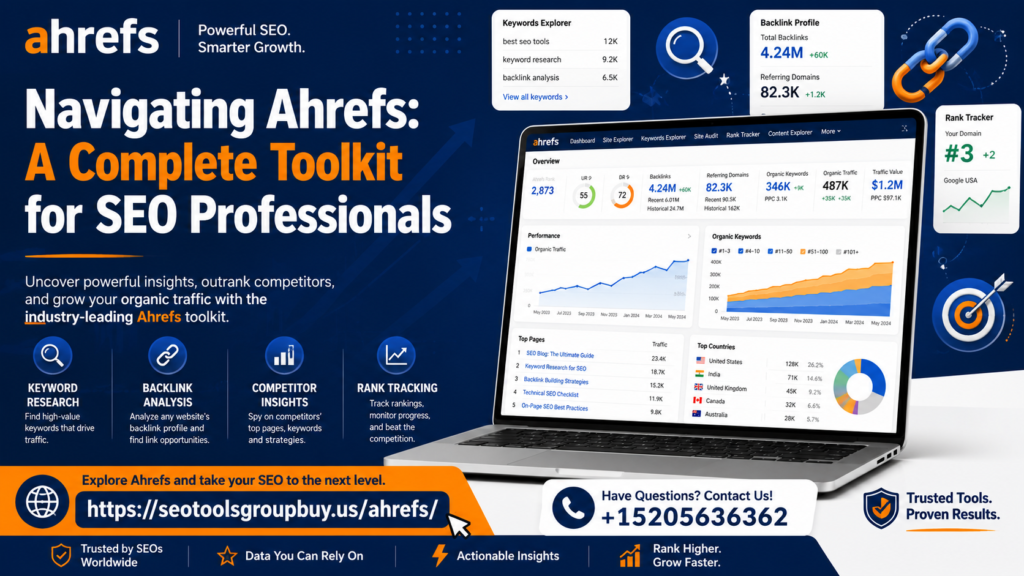
Cracking the Code of Domain Rating: What Your Website’s ‘Reputation Score’ Really Means
Imagine opening a local coffee shop in a new city. If a famous food critic recommends your brew, you instantly gain more trust than if a random stranger praised it. The internet works exactly the same way through backlinks—when another website links to yours, it acts as a digital word-of-mouth recommendation. These links build your website’s authority, telling Google that you are a trusted, reliable source. Ahrefs measures this digital trust using a tool called Domain Rating (DR).
Domain Rating heavily influences your overall ahrefs rank. Think of DR as a 0-100 reputation score. Unlike basic seo metrics that simply estimate visitor traffic, Domain Rating evaluates the true strength of your digital recommendations based on three specific factors:
- The total number of unique websites linking to your pages.
- The existing authority of those recommending websites.
- How many other sites those referring websites link out to.
Just remember that this metric is completely relative, meaning a DR of 30 isn’t a ‘failing grade’ if your local plumbing competitors are all sitting at a 15. Your goal is simply to be the most recommended business in your specific industry.
Site Explorer: How to Peek Under the Hood of Any Competitor’s Website
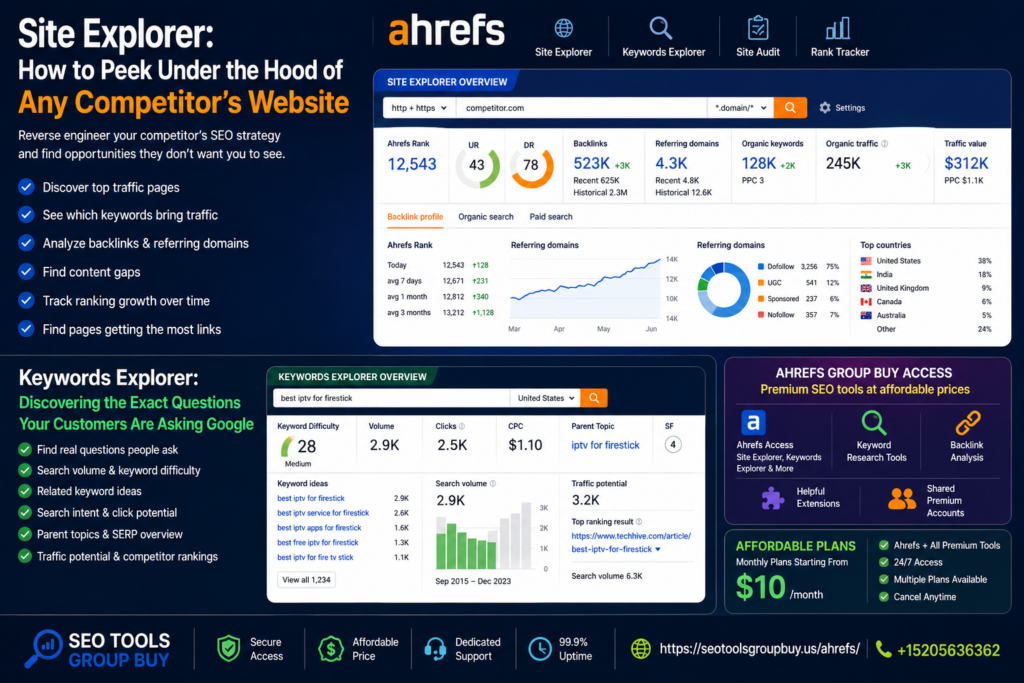
Ever wonder exactly which pages are bringing customers to your biggest rival? Typing their URL into Site Explorer reveals their ‘Organic Traffic,’ which simply means the visitors who find them naturally through Google rather than through paid advertisements. When you click the ‘Organic Search’ tab, you get a cheat sheet of the exact keywords driving their success. If a competitor selling yoga mats is getting thousands of visits from the phrase ‘best non-slip yoga mat,’ you immediately know that is a topic you need to cover on your own website.
Seeing what brings them traffic is only half the puzzle; you also need to know who is recommending them online. Learning how to conduct a backlink audit using ahrefs site explorer allows you to view a rival’s ‘Backlink Profile’ to see every website pointing to theirs. Here, it is crucial to understand the difference between ‘Referring Domains’ (the actual websites, like a local news station) and ‘Backlinks’ (the individual links). A single news station might link to your competitor five times, meaning one Referring Domain provided five Backlinks. By analyzing referring domains and anchor text distribution—the actual clickable words used in those links, like ‘voted best yoga mat’—you uncover exactly how others describe their business.
Performing this kind of backlink analysis transforms competitor envy into a practical roadmap for your own growth. Instead of guessing who might link to your store, you can approach the exact same websites already linking to your rivals. Once you know who is talking about your competitors and which pages are winning, you can pivot to finding the hidden opportunities they missed.
Keywords Explorer: Discovering the Exact Questions Your Customers Asking Google
Writing blog posts without checking what people actually type into Google is like opening a storefront in a deserted alleyway. Effective keyword research changes this by showing you exactly how many people are searching for specific phrases every month—a metric called Search Volume. Instead of guessing, you can focus on topics with guaranteed foot traffic, saving you from writing articles nobody ever reads.
However, chasing popular terms is a trap if you ignore how hard it is to actually win that traffic. Ahrefs uses a 0-100 score called Keyword Difficulty (KD) to measure competition; high scores mean you are fighting retail giants, while low scores reveal easy wins. The secret to finding low competition keywords with high search volume involves a simple four-step routine:
- Enter a broad topic (like ‘coffee beans’) into the search bar.
- Filter the results to show a maximum Keyword Difficulty (KD) of 20.
- Set a minimum Search Volume of 500 to ensure enough people care.
- Look for specific, actionable phrases like ‘how to store coffee beans.’
Before you start writing, you must understand why the person is searching—a concept called Search Intent. Using ahrefs keywords explorer for search intent analysis helps you determine if a user wants to buy right now or simply learn. If the top results are educational blogs, write a guide; if they are product pages, they have their credit card ready.
Content Explorer: Finding the ‘Hidden Menu’ of Topics Your Audience Already Loves
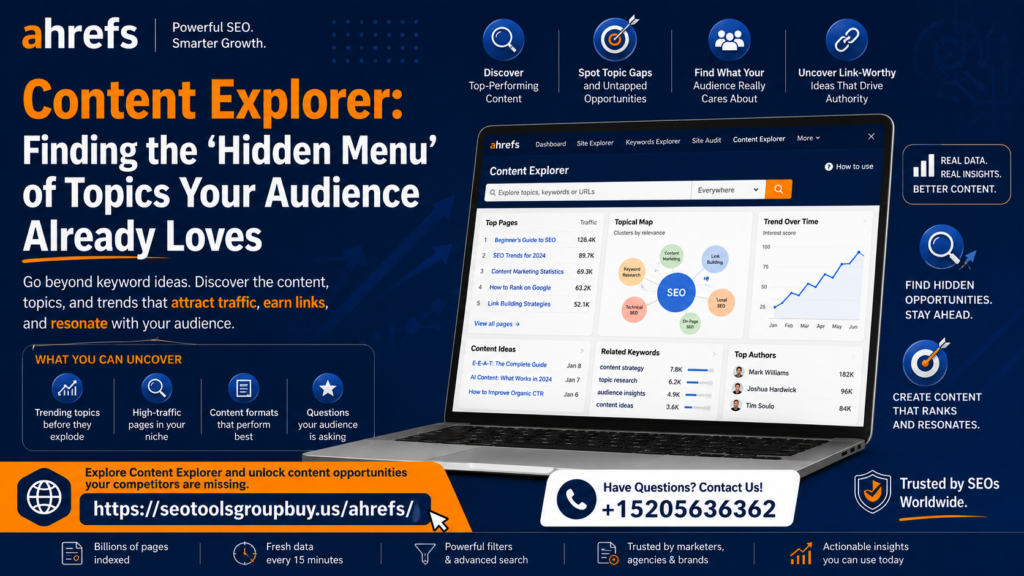
While some articles get shared thousands of times, others sit unread. By typing a broad topic into content explorer, one of the most visual ahrefs tools, you instantly see what is trending across the internet. This feature breaks down the difference between articles getting consistent traffic from Google searches and those relying on temporary spikes from viral social shares.
Competing against giant industry websites can feel impossible, but identifying content gaps with ahrefs content explorer levels the playing field using the ‘Underdog’ strategy. You can filter your search to highlight articles from small, low-authority websites that are pulling in massive traffic. When a tiny blog wins big on a specific topic, it exposes a weak spot in the market you can easily exploit by writing a better guide.
Another valuable tactic hidden in this dashboard is broken link building, which involves finding popular articles that were deleted and now show dead ‘404 Error’ pages. You can publish a fresh post on that exact topic and ask websites linking to the dead page to point to your new storefront instead.
Site Audit: Fixing the Technical Leaks That Are Sinking Your Search Rankings
A beautiful retail store with a jammed front door loses customers immediately. Your website might have similar invisible barriers preventing Google’s automated inspection robots from ‘crawling’ or reading your pages. Running a site audit acts like hiring a digital building inspector that scans everything and hands you a simple ‘Health Score’ from 1 to 100. This grade instantly reveals if your foundation is solid or if technical leaks are silently driving away customers.
Instead of overwhelming you with confusing code, this dashboard creates a straightforward to-do list for fixing technical seo issues with ahrefs site audit. Here are the top three common technical issues found in a Site Audit:
- 404 Errors: Dead-end links that frustrate your visitors and signal to Google that your site is poorly maintained.
- Missing Titles: Blank digital storefront signs that fail to explain what your page is actually selling.
- Orphan Pages: Valuable articles or products hidden away with zero links pointing to them.
Connecting these hidden pages requires internal link optimization using ahrefs audit tool. Think of internal links as the directional signs hanging inside your store, guiding shoppers from a helpful blog post directly to your checkout page. The tool clearly highlights which web pages need more of these helpful signposts.
Rank Tracker: Watching Your Business Climb the Rankings in Real Time
Once you know the exact search terms you want your business to be famous for, you need to know where you stand. Your SERP position—the exact spot your website appears on a Search Engine Results Page—dictates how many customers actually find you. Instead of manually searching Google every morning, rank tracking automates this entirely. Simply type in your important keywords, select your target country, and let the software do the heavy lifting.
Visualizing progress is deeply satisfying, especially when tracking organic traffic growth with ahrefs share account dashboard and watching those trend lines climb. The tool calculates your ‘Visibility Percentage,’ estimating what slice of the total search traffic pie you are capturing. You can also plot your progress directly against three rival businesses on the exact same graph. By monitoring competitor keyword rankings in rank tracker, you instantly spot when another local shop overtakes you, allowing you to react quickly.
Do not panic if you drop a few spots overnight, as ‘Ranking Fluctuations’ are perfectly normal while Google tests different results. To avoid obsessing over daily bounces, set up automatic email alerts that only notify you when you finally win a top spot.
Choosing Your Weapons: Why Ahrefs Often Beats Other SEO Tools for Beginners
Deciding on search software is tough. When comparing ahrefs vs semrush for keyword research, the main difference for beginners is everyday usability. While SEMrush offers a massive suite of complex marketing features, the ahrefs seo toolkit is famously streamlined. This clean design drastically improves your Tool ROI—the actual value you get from your monthly subscription—because you spend less time lost in confusing menus and more time making profitable updates to your website.
Even when exploring the best ahrefs alternatives for small business owners, industry experts consistently return to Ahrefs for its world-class Link Database. Think of this database as the internet’s most accurate phonebook, tracking exactly which websites are recommending others. It provides incredible Data Freshness, meaning you never rely on outdated competitor information. Ahrefs dominates backlink tracking because:
- It boasts the largest active index of live links in the industry.
- It catches new digital ‘word-of-mouth’ mentions almost immediately.
- The dashboard easily separates highly valuable links from useless spam.
Mastering these features doesn’t require an expensive consultant. The company provides Ahrefs Academy, a completely free library of simple video courses that teach you how to interpret your dashboard.
Your SEO Power-Hour: A Weekly Routine to Turn Ahrefs Data into Revenue
Staring at a dashboard full of colorful graphs can quickly lead to analysis paralysis. Instead of randomly clicking through various ahrefs features, smart business owners protect their time by running a dedicated, 60-minute SEO Power-Hour once a week. This priority-based optimization routine forces you to focus on quick updates that drive traffic, preventing tool fatigue.
Your weekly checklist should prioritize easy wins over complex projects:
- Minutes 1-15: Fix Dead Ends. Start by recovering lost backlinks through broken link building. If another site points to your deleted page, use Site Explorer to find and fix it, instantly reclaiming that digital word-of-mouth.
- Minutes 16-40: Spy on Competitors. Run a bulk backlink analysis for link prospecting. Paste several competitor websites into the Batch Analysis tool to quickly spot popular sites recommending them, revealing exactly who you should contact next.
- Minutes 41-60: Tweak Content. Find one article stuck on page two of Google and update the wording to better match the exact questions your customers are typing into the search bar.
Building this sustainable routine proves you don’t need to hire an expensive agency to see consistent growth. By treating your data review as a focused, action-only appointment, you naturally turn intimidating metrics into profitable website traffic.
From Data Overwhelm to Market Dominance: Your Roadmap for Ahrefs Success
A clear roadmap replaces guesswork with strategic execution. You no longer have to guess what your competitors are doing or wonder why your website traffic is stalled.
You now possess a clear strategy for your search marketing. You can use Site Explorer to investigate competitor health, turn to Keywords Explorer to discover the exact questions your customers ask, and rely on Rank Tracker to watch your progress. These three ahrefs features form a reliable digital foundation.
Remember that perfect data is never the ultimate goal because continuous execution is what truly matters. Search engine optimization requires patience and steady effort over time.
Start with a simple action to see immediate results. Run a free Site Audit on your own domain right now. Fixing just a few broken links or missing tags from that initial report will instantly improve your foundation and build your strategic confidence.
About the Author